

 25 Nov 2017
Tags: Southwark, Demolition, Ludgate House, Samson House, Redevelopment, Landfill, Environmentally Aware, carbon footprint

- Close to 90% of waste diverted from landfill during Ludgate House demolition works
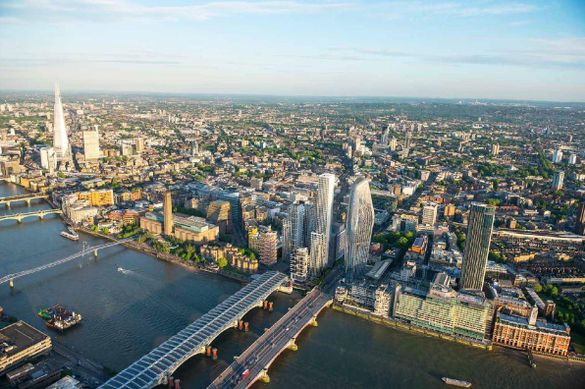
Demolition contractor McGee is presently carrying out the demolition of Ludgate House on Blackfriars Road, marking the first stage of Native Land's 1.4m sq ft Sampson and Ludgate redevelopment.
Several measures have been implemented by McGee in order to increase recycling efforts on-site, minimise landfill waste, and conserve energy.
Less energy, diesel, and water was used when measured against projected targets, and the total carbon footprint of demolition to date is 3250 kg/CO2 lower than originally accounted for.
Of total waste generated on site as of November, 75.4% was recycled and 12.5% was recovered at licensed facilities.
In total, 87.9% of waste at Ludgate House has been diverted from landfill.
Alasdair Nicholls, Chief Executive of Native Land said:
“Native Land is committed to following an environmentally-friendly approach throughout all stages of the development cycle and we are pleased to be working with McGee to progress the demolition of Ludgate House in the most sustainable way possible.”
Demolition works at Ludgate House are due to complete in March 2018.
-ends
Ludgate House and Sampson House together form a 1.4m sqft redevelopment project by an international consortium comprising, Temasek, HPL and Amcorp Properties, with Native Land acting as investment partner and development manager to the consortium.
The scheme will create a destination neighbourhood comprising cultural, retail and leisure amenities as well as new office space and housing which will be linked by extensive public open spaces. It will reconnect the space between the Tate Modern and one of London's major transport hubs, Blackfriars Station. The London Borough of Southwark will also benefit from a substantial contribution towards further housing within the Borough.