
 19 Jul 2007

A new parliamentary report out today is calling for a radical overhaul of regeneration policy to tackle investment in deprived areas.
Research has shown that investment in run-down communities can be more profitable than investing in well-off areas, but preconceptions over crime and inadequate infrastructure put developers off investing.
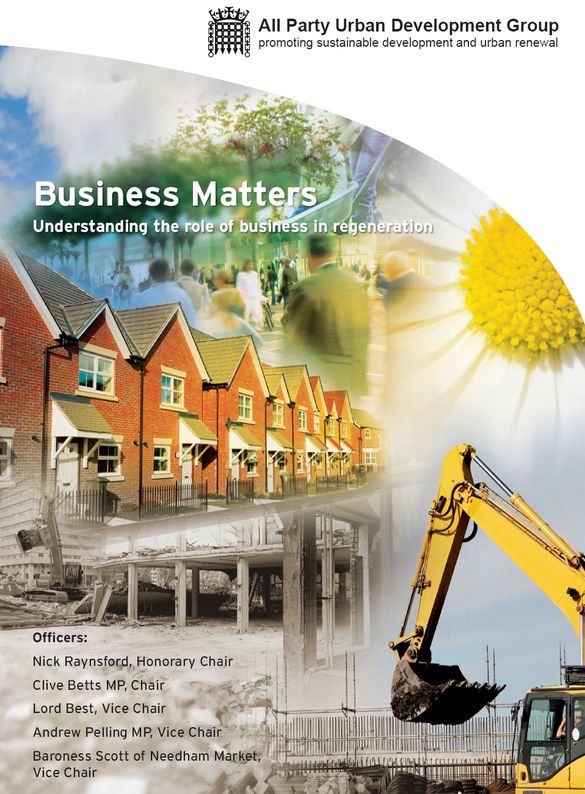
The All Party Urban Development Group's report Business Matters, argues that these 'unsexy' areas have been overshadowed by the government's enterprise-led regeneration initiatives which the report concludes do not offer a quick-fix for tackling deprivation.
The report backs calls from the property and retail industries for property owners to contribute to Business Improvement Districts (BIDs) – an initiative that sees business owners pay a levy on top of their business rates to pay for amenities such as extra street cleaning, security and marketing, above and beyond what the council provides.
BIDs have, so far, been most successful at making good areas better, but in deprived areas BIDs are less successful because of occupiers' tight margins and the lack of provision in the existing BIDs financial structure for property owners to pay.
Business Matters argues that making property owners pay a BIDS levy would secure the long-term future for many regeneration schemes in deprived areas by guaranteeing funding. It would also address the issues which businesses are most concerned about that lie outside the remit of local government regeneration departments.
The report offers several wide-ranging recommendations, calling for:
. the establishment of a property owner levy for Business Improvement Districts, . deprived areas to be recognised and prioritised in planning policy and, . recognition of the importance of providing public transport access to areas where jobs are concentrated.
The full report is at: http://www.bpf.org.uk/pdf/20864/Business%20Matters%20-%20Embargoed%20until%2012.01am%2019th%20July.pdf
Businesss Matters questions the commonly held view that one of the key causes of deprivation stems from a lack of jobs and finds that the relationship between business location and deprivation is not as straightforward as some might think.
The report argues that some deprived areas such as Brighton and Preston have above-average rates of business activity, and some deprived areas with low business activity do not necessarily need more businesses such as Lewisham which is close to areas with good employment opportunities.
The real problems lie with misconceptions and poor information about the opportunities and returns available in deprived areas, poor business environment and infrastructure, and the fragmentation of land ownership which makes it difficult for developers to "parcel up"; and the need for the public sector to shoulder some of the risk of investment and development in deprived areas.
Clive Betts MP, Chair of the All Party Urban Development Group, said:
"Business Matters couldn't have come at a better time. With a new government committed to revitalising deprived areas, we have an excellent opportunity to review existing policy; examine what has worked and look at those areas that need to be improved. Our report sets out in very clear terms what the Government's priorities should be for streamlining and improving regeneration policy so that it is holistic and targeted."
Julie Grail Director ,Chief Executive & Co-founder of British BIDs, at the evidence session in Parliament on 20 March 2007 said:
"Whilst we have an occupier levy in place, we will see BIDS coming in good areas, making them better, and the answer is to look at opportunities where we can have an owner levy in tandem with the occupier levy in a number of places."
-ENDS-
NOTES TO EDITORS
1. Business Matters is the APUDG's second formal report. It follows a Parliamentary inquiry session held on March 20th, which took evidence from key public and private sector stakeholders and also draws on written submissions to the APUDG as well as desk-based research. It is available for free download at the APUDG website: www.allparty-urbandevelopment.org.uk.
2. The All-Party Urban Development Group (APUDG) is a cross-party body of MPs and Peers committed to progressing urban renewal and sustainable development in the UK. Its officers are:
• Clive Betts MP (Labour – Sheffield Attercliffe – Chair) • Lord Richard Best (Cross-bench – Vice Chair) • Andrew Pelling MP (Conservative – Croydon Central – Vice Chair) • Baroness Scott of Needham Market (Liberal Democrat – Vice Chair) • Rt Hon Nick Raynsford MP (Labour – Greenwich and Woolwich – Hon Chair)
3. The Secretariat for the APUDG is provided jointly by the British Property Federation (www.bpf.org.uk) and the Centre for Cities at ippr (www.ippr.org/centreforcities), which carries out independent research on behalf of the Officers.
4. Business Matters points out that the relationship between business location and deprivation is not straightforward. There is an underlying assumption that low business activity leads to low job opportunities, leading to a low employment rate, and ultimately a high level of deprivation. But some deprived areas have above-average rates of business activity:
Brighton and Hove has 400 businesses per 10,000 resident adults as compared to a national average of 388 Preston in the North West has 358 businesses per 10,000 adults compared to a regional average of 321
Some deprived areas with low business activity do not necessarily need more businesses, e.g. Lewisham, which is close to areas with good employment opportunities).
But in other areas, low business activity/investment may need to be addressed through policy measures.
5. Business Improvement Districts allows local firms to vote on whether to pay a supplementary levy on their business rates, in order to obtain certain services in addition to those provided by the local authority. The businesses themselves decide how these resources should be allocated. Money is often spent on 'crime and grime' initiatives such as CCTV, radio-linked security officers, one-off cleaning blitzes, anti-flyposter treatments, improving lighting and implementing environmental improvements. Since Business Improvement District legislation came into effect in 2004, 50 BIDs have been set up (as of 12 July 2007). The vast majority of BIDs are located in established and successful centres of retail and leisure. Currently there are only 8 BIDS in industrial areas. Eighteen of the 50 are in London, where the London Development Agency has funded a programme to promote and support BIDS.
6. Business Matters sets out the barriers to business investment in deprived areas:
Weak market demand for commercial property development - The perception that rental returns and capital appreciation will be lower in deprived areas often discourages commercial developers from investing.
Complexity and cost of large-scale regeneration projects - The high remediation and infrastructure costs associated with some brownfield sites may deter investment. Fragmented public sector funding streams and weak strategic coordination can make things worse.
Poor business environment - Deprived areas are often characterised by relatively high levels of crime or perceived crime, low quality public space and poor transport infrastructure.
Availability and affordability of business space - Economic development strategies often propose that public sector agencies step in to provide or subsidise premises, to make them more affordable. But this approach can be misplaced.
Fragmented land ownership - Fragmented land ownership patterns make it more difficult to parcel up land for development and make effective partnership working difficult.
Planning - The planning system is seen as too slow, and too cumbersome to deal effectively with commercial development and isn't used effectively to promote development in deprived areas
7. Business Matters puts forward some potential solutions to these problems:
Not all deprived areas need more business – policy should be targeted better. - Business investment is not a panacea for tackling deprivation. Not all deprived areas have below average levels of business. In some deprived areas increasing business investment and activity is not a viable option.
A holistic approach to increasing employment should be adopted which may involve providing public transport to jobs rather than job creation. - Targeting deprived areas is too blunt if you're trying to help deprived people. Urban deprivation is often highly localised whilst urban economies and labour markets are much wider than local authority districts. People need good public transport access to where jobs are located.
Regeneration bodies should stop tinkering with policy and create a stable environment with business. - Development investment has long time horizons and long term business models. Frequent changes in policy or policy priorities cause confusion and undermine developer confidence. Clear aims are key to successful intervention design and successful partnership.
Understand what drives the market and how to channel it to wider objectives. - Profit is critical but it isn't the only issue for the private sector. Sharing, managing, and mitigating risk is an effective lever for the public sector. Demonstration projects can be effective.
There should be fewer, larger, more flexible schemes which address the issues that matter , and all new national programmes should be cleared through the Cabinet Office. - The sub-national review should address this issue, but government will have to be vigilant post review about new schemes and initiatives reappearing.
- Regeneration programmes often fail to address the core issues for business such as parking, transport, street cleaning, regulation – which lie outside of local government economic development and regeneration departments. Small scale, unexciting measures to address the issues businesses care about are important.
Deprived areas should be a priority in planning policy. - Planning is critical and has not fully examined the issue of investment in deprived areas. More guidance is needed on how to deal with deprived areas which lie outside the town centre. Outside town centres, deprived areas should have more priority.
Business Improvement Districts should be made to have a property owner levy where appropriate. - Provision should be made to have a property owner BIDS levy, where appropriate. This would make BIDS viable in more areas, more equitable, secure more funds, and encourage a longer-term view.
For further information and to arrange interviews with the APUDG's officers contact: BPF and APUDG media manager Andrew Teacher Tel: 020 7802 0113 / 07968 12 4545 Email: ateacher@bpf.org.uk